instructions for use
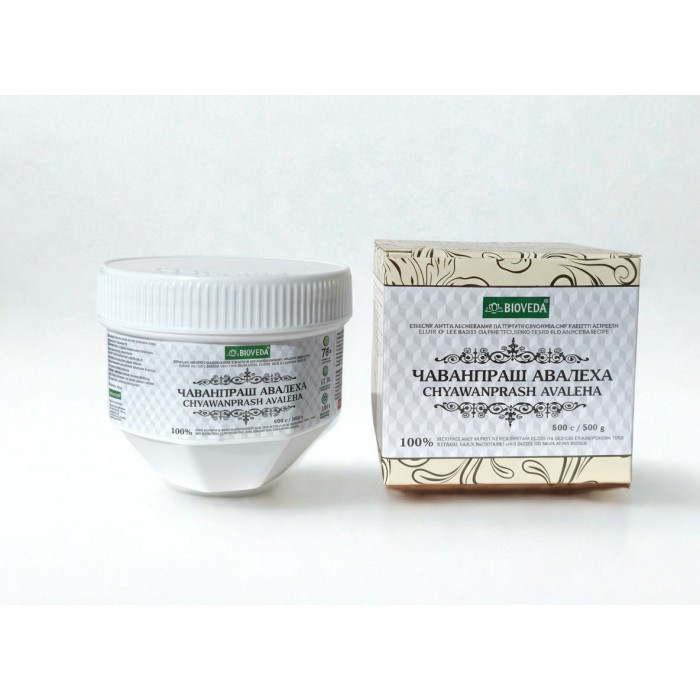
CHAVANPRASH AVALEHA BIOVEDAтм
JAM BASED
ON HIMALAYAN HERBS
Ingredients: Aegle marmelos, Clerodendrum phlomidis, Oroxylum indicum, Accia
cotoechn, Stereospermum suaveolens, Sida cordifolia, Desmodium gangeticum,
Uraria picta, Phaseolus trilobus, Teramnus labialis, Piper longum, Tribulus
terrestris, Solanum indicum, Solanum xanthocarpum, Pistacia integerrima,
Phyllanthus niruri, Vitis vinifera, Leptadenia reticulata, Inula racemos,
Aquilaria agallocha, Terminalia chebula, Tinosphora cordifiolia, Tacca aspera,
Curcuma zedoaria, Cyperus rotundus, Boerhavia diffusa, Elettaria cardomomum,
Santalum album, Nelumbium nucifera, Pueraria tuberosa, Vetiveria zezanioides,
Cinnamomum zeylanicum, Cinnamomum tamala, Ochrocarpus longifolia, Withania
somnifera, Piper nigrum, Glycyrrhiza glabra, Bambusa aruudinacea, Sesamum
indlcum, Clarified butter(ghee), Apis mellifera(honey), Saccharum officinarum,
Emblica officinalis.
Medico-biological
properties of the components.
The physiological effect of Chavanprash is due to the properties and
synergism of the active substances included in its composition.
Emblica is the richest natural source of vitamin C, the
content of which is 1.5 times more than in the fruits of rose hips. Thanks to
carotenoids and bioflavonoids, it has antioxidant properties, neutralizes the
aggressive action of free radicals formed as a result of oxidative processes.
In addition, it has an immunomodulatory effect and stimulates the synthesis of
hemoglobin.
Terminalia chebula literally translates as "plant that steals
diseases." Thanks to the content of chebulic acid, it improves brain
function, strengthens memory, increases the ability to learn, and also helps
the body adapt to adverse weather conditions.
Dashamula is the
general name for 10 roots: Bilva, Agnimanthi, Shionaki, Kasmarya, Pataloga,
Shaliparni, Prishniparna, Vrihati, Kantakari and Goktura. These 10 roots,
thanks to the rich content of sitosterol and glycosides, normalize the state of
the neuroendocrine system, regulate the function of the thyroid, pancreas,
thymus, adrenal glands and reproductive system.
Aegle marmelos contains the glycoside marmelosin, which has an
antiarrhythmic, tonic, anti-inflammatory and antipyretic effect.
Clerodendrum phlomidis,
Oroxylum indicum
contains glycoside oroxylon and
salicylates, have analgesic, diaphoretic and anti-inflammatory effects. The
plant is used to treat arthrosis, rheumatism and colds.
Accia cotoechn tree has a diuretic effect. It is used for the
treatment of chronic cystitis.
Desmodium gangeticum has a pronounced
antipyretic and diaphoretic effect. The plant is also rich in the alkaloid
resin, which is why it has a tonic effect.
Uraria picta is log-shaped herb, thanks to the rich content of terpenoids and
tannins, strengthens the endothelium of blood vessels. Expectorant and
antipyretic effects are also noted.
Solanum indicum, Solanum xanthocarpum
and Pistacia integerrima
stimulate the synthesis of corticosteroids, have a mucolytic, expectorant,
antiallergic effect. Eliminate flatulence and intestinal colic.
Tribulus terrestris is rich in silicic acid salts, the presence of
which prevents the formation of kidney stones. It also has an anti-inflammatory
and bacteriostatic effect on the genitourinary sphere. Increases potency.
Prevents the development of chronic prostatitis and prostate adenoma.
Ashwagandha contains hitosterols, which are an analogue of
the sex hormone testosterone, so it is used to correct various sexual disorders
in both men and women. In addition, thanks to the somniferine alkaloid, this
plant is an excellent tonic, adaptogen and anti-stress agent. Somniferin
transfers the oxidation of glucose to the aerobic pathway even in tissues
undergoing hypoxia. As a result, 38 ATP molecules are formed from one glucose
molecule. Thus, ashwagandha eliminates chronic fatigue and tissue acidosis.
Phyllanthus niruri, due to the high content of
phyllanthin and hypophyllanthin, has a pronounced choleretic and
hepatoprotective effect.
Bambusa aruudinacea is one of the richest natural
sources of silicic acid. Thanks to this, it prevents the formation of stones in
the gall bladder and kidneys.
Piper longum is a good stimulator of the
digestive glands, eliminates flatulence, constipation, and poor appetite.
Sida cordifolia contains the alkaloid
rotundifolin, which is very similar in its chemical structure to ephedrine. It
increases the tone of the central nervous system, stimulates the vascular and
respiratory centers of the medulla oblongata, increases cardiac output,
relieves bronchospasm.
Saffron stimulates the regeneration
of liver cells, enhances hematopoiesis (synthesis of blood cells), normalizes
the metabolism of estrogens (accelerates the transition of estradiol to
estrol), preventing the development of endometriosis, fibroids, and cervical
erosion.
Tinospora and Leptadenia reticulata have pectins, berberine and tinosiorin, which
have the ability to purify the blood from products of incomplete metabolism,
immune complexes and toxins.
Pistacia, due to the high content of
essential oils and medicinal resins, has an expectorant, broncholytic and
antiseptic effect.
Phaseolus trilobus have a moderate choleretic,
sedative and antipyretic effect. It tones the nervous system, stimulates the
digestive organs and has a diuretic effect.
Boеrhavia diffusa due to the high content of calcium salts and
punarnavin alkaloid, has a pronounced
diuretic effect, enhances the synthesis of hemoglobin and eliminates stagnation
in the liver. Catechins strengthen the endothelium of blood vessels.
Glycyrrhiza glabra has an expectorant,
choleretic and antispasmodic effect. Beta-sitosterol prevents the development
of adenomas of the prostate gland, increases urination. The high content of
glycyram causes immunomodulatory, anti-inflammatory and adaptogenic effects.
Dioscorea villosa, Hypеricum perforаtum, and Justicia adhatoda are rich in natural antiseptics that prevent the
reproduction of various intestinal infections.
Ipomoea digitata normalizes the monthly cycle,
has a choleretic and diuretic effect.
Anacyclus pyrethrum and Mеsua férrea stimulate the work of the cardiovascular system, capillary blood
circulation, enhance the effect of norepinephrine, increasing the tone of the
body.
Cinnamon has healing properties due to
linalool, resin alkaloid and cinnamyl acid. This plant has diaphoretic,
carminative, expectorant effects.
Cardamom activates the pancreas,
normalizes intestinal peristalsis, reduces nausea.
Santal contains aldehyde, which
allows you to use sandalwood for the treatment of inflammatory diseases of the
genitourinary system, acute respiratory infections and conjunctivitis.
Ghee (Clarified butter), sesame oil and cane sugar are the basis by which the phytoreceptor is delivered
to the body.
Indications
for use: It is recommended as a health strengthening agent. It
is also used to improve blood circulation and normalize immunity, restore the
functioning of the nervous and endocrine systems of the body.
Method of use and dosage: Take
15-20 minutes before meals with drinking warm water, green tea or milk. It
should be taken in small portions, holding (absorbing) in the mouth for 5-10
seconds. For adults and children from 12 years of age, from 1/2 to 2 teaspoons
2 times a day (morning and evening) in case of vitamin and mineral deficiency,
states of stress or fatigue, as well as to increase the general resistance of
the body, especially during the recovery period.
Dietary supplement. It is not a
medicine. Non-GMO. It should not be used as a substitute
for a full-fledged diet, and should not exceed the specified recommended amount
(portion) for daily consumption.
Contraindications: Individual intolerance to
components, acute diseases or exacerbation of chronic kidney diseases,
diabetes, dyspepsia, pregnancy and breastfeeding
Storage conditions: Store in the manufacturer's original packaging, in a dry place, out of
reach of children, at a temperature of 0 C to 25 C.
Shelf life: 36 Months from the date of Manufacturing. Do not use after the expiration date.
Date of manufacture or end date of consumption
"Use by": see package.
Release form: Jar of 500 g.
Manufacturer: MEHTA HERBALS PVT. LTD. PLOT NO. G-523, LODHIKA, GIDC,
METODA, DIST. RAJKOT-360021, GUJARAT, INDIA.